ISO 45001 Certification Consulting Services in Iraq
QUALIT
CERT
CONSULTING AND ISO CERTIFICATIONS
Qualitcert provides expert ISO 45001 Certification Consulting Services in Iraq, helping organizations implement Occupational Health and Safety Management Systems (OHSMS) that align with global standards. ISO 45001 focuses on reducing workplace risks, improving employee safety, and fostering a healthier work environment. In key Iraqi cities such as Baghdad, Basra, Erbil, and Mosul, businesses across sectors—from construction and oil & gas to manufacturing and logistics—benefit from ISO 45001 implementation. Qualitcert guides you through hazard identification, risk mitigation, and legal compliance strategies tailored to Iraq’s regulations. We assist in creating a robust OHS policy, setting clear objectives, and engaging employees in safety practices. Our consultants help you prepare documentation, conduct internal audits, and face external certification bodies with confidence. Whether you’re a small business or a large enterprise, our solutions are scalable and cost-effective. Achieving ISO 45001 certification not only improves safety performance but also enhances your brand image and regulatory standing. Qualitcert simplifies the entire certification journey with a hands-on, step-by-step approach. From gap analysis to implementation and final audit support, we ensure full compliance. With our support, Iraqi companies can minimize incidents, ensure worker well-being, and foster continuous improvement. Partner with Qualitcert for reliable, regionally informed consulting in ISO 45001.
Please Reach Us Today
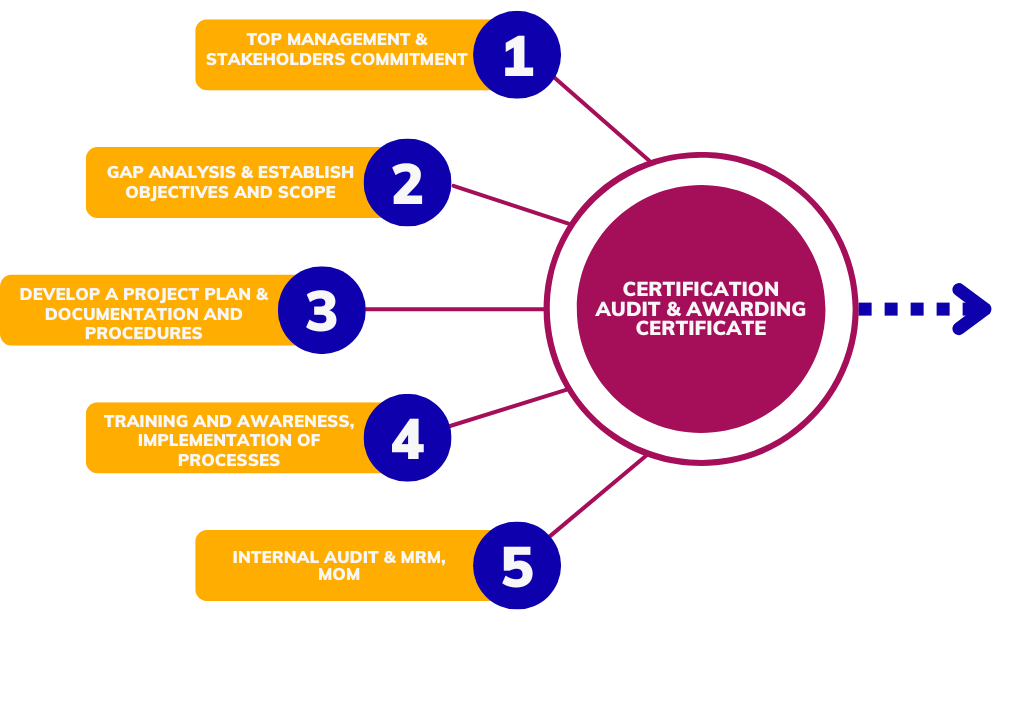
Approach and Methodology used to implement Management System Standard
Implementing an ISO standards involves a structured methodology to ensure that the organization effectively meets the requirements of the chosen standard and achieves certification. Sometimes defined methodology may vary depending on factors such as the size of the organization, its industry, and the complexity of the ISO standard being implemented, the following steps provide a basic framework